Exercise Isn't Just About Walks.
It's About Mental Stimulation.
Pet Parenting
March 03, 2026
.png)
Q: Why is my dog still hyper even after long walks?
If your dog gets long walks but still comes home bouncing off the walls, the issue may not be a lack of exercise. Often, the real problem is a lack of dog mental stimulation. Many pet parents focus only on physical activity, but good exercise for dogs is not just about distance or steps. It’s about engaging a dog’s brain as well.
If your dog gets long walks but still comes home bouncing off the walls, the issue may not be a lack of exercise. Often, the real problem is a lack of dog mental stimulation. Many pet parents focus only on physical activity, but good exercise for dogs is not just about distance or steps. It’s about engaging a dog’s brain as well.
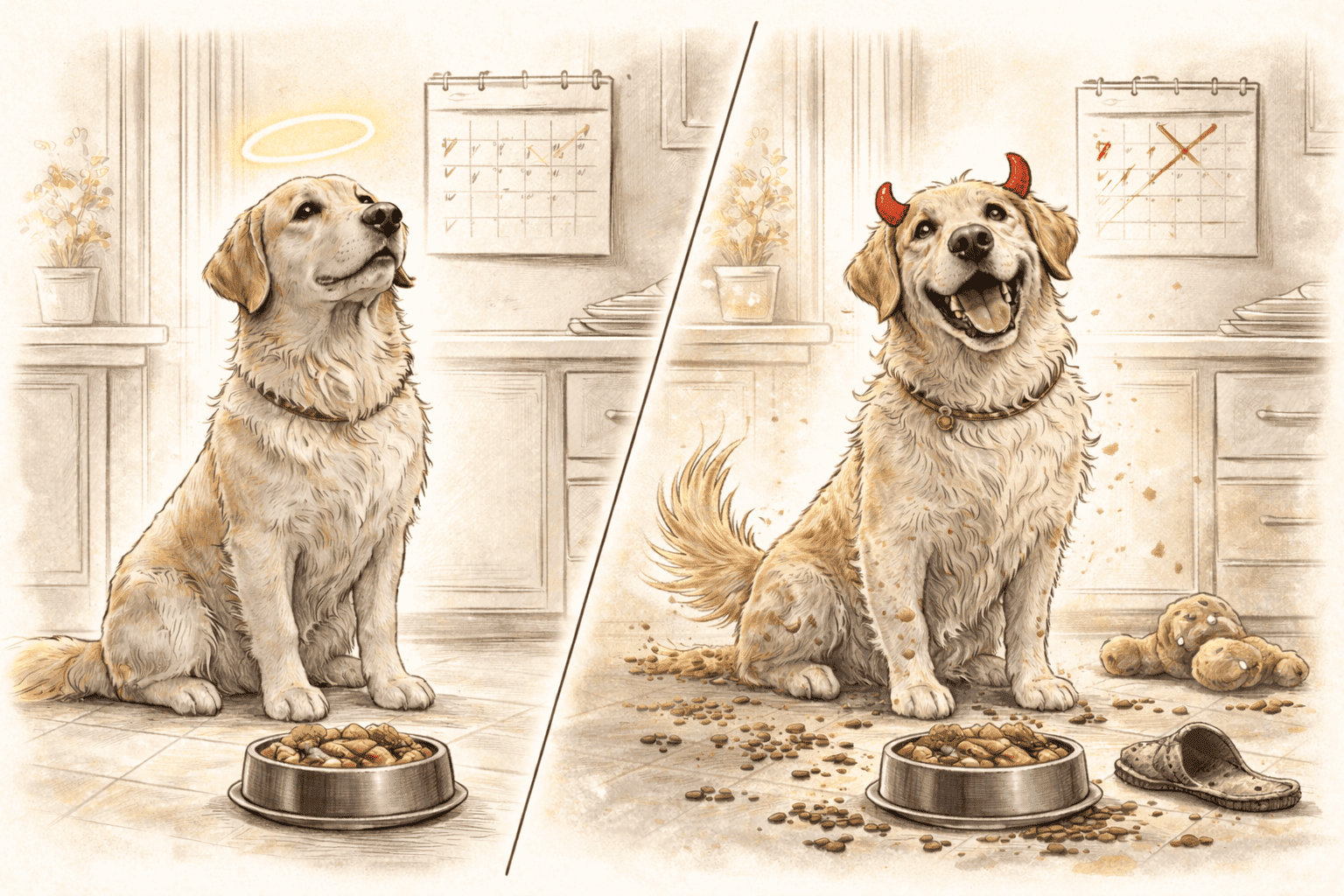
A mentally satisfied dog is often calmer than one that is simply physically tired. Without enough mental engagement, dogs may display what people describe as bored dog behaviour such as excessive barking, destructive chewing, or constant attention-seeking.
Q: What does it mean when people say “a tired dog is a good dog”?
The idea that a tired dog behaves better is true, but “tired” doesn’t mean exhausted. It means fulfilled. Dogs that receive enough mental stimulation tend to:
The idea that a tired dog behaves better is true, but “tired” doesn’t mean exhausted. It means fulfilled. Dogs that receive enough mental stimulation tend to:
- Settle more easily at home
- Bark less out of boredom
- Chew fewer inappropriate objects
- Show fewer attention-seeking behaviours
Many cases of bored dog behaviour are not discipline problems at all. They are signs that a dog’s natural instincts are not being used. Dogs were originally bred to track, sniff, herd, guard, retrieve, and solve problems. When those instincts aren’t engaged, their energy often shows up as restlessness.
Q: Why is mental stimulation sometimes more effective than physical exercise?
Physical exercise is important, but dogs adapt to it quickly. Over time, a dog can build stamina and require longer walks just to burn the same amount of energy.
Physical exercise is important, but dogs adapt to it quickly. Over time, a dog can build stamina and require longer walks just to burn the same amount of energy.
Dog mental stimulation, however, challenges the brain in ways that physical activity alone cannot. Mental activities:
- Burn energy efficiently
- Reduce stress hormones
- Build confidence
- Improve focus and impulse control
In many cases, ten minutes of problem-solving or sniffing games can provide more satisfaction than a long, rushed walk. That’s why balanced exercise for dogs should include both physical activity and mental enrichment.
Q: What are simple ways to provide enrichment for dogs at home?
Good enrichment for dogs doesn’t require expensive toys or complicated setups. Some simple activities include:
- Sniff games: Hide treats around the house and let your dog search
- Food puzzles: Turn mealtime into a problem-solving activity
- Training games: Teach a small new cue or trick
- Name games: Ask your dog to find specific toys
- Window watching: Controlled observation helps develop calm focus
Rotating these activities keeps dogs engaged and prevents boredom.
Q: Does every dog need the same type of stimulation?
No. Exercise for dogs should always consider breed, age, and energy level. High-energy or working breeds may benefit from:
No. Exercise for dogs should always consider breed, age, and energy level. High-energy or working breeds may benefit from:
- Problem-solving challenges
- Advanced training exercises
- Purpose-driven activities
Senior dogs often do better with:
- Gentle sniffing walks
- Simple puzzles
- Low-impact mental enrichment
Puppies usually need short, frequent stimulation sessions rather than long physical workouts.
The takeaway: Balanced exercise for dogs combines physical movement with dog mental stimulation. When dogs use their brains, their bodies relax more naturally.
Slow the walk. Let them sniff. Give their minds a job. Often, a sniff walk is better than a speed walk.
.png)
.png)

.png)
.png)